Showing posts with label Home Buyer Tips. Show all posts

Tuesday, August 11, 2020

What You Need to Know About Agency Relationship

Pin It

What you need to know about agency relationship when working with Real Estate Agent

Real estate agency relationships, like all business relationships, can be formed in a number of ways. Real estate agency relationships is established when someone who represents your best interests in a real estate transaction and owes you fiduciary responsibilities. Agency relationships are usually established in writing.

What you need to know about agency relationship when working with Real Estate Agents

Seller’s Agent
Seller’s agent also known as a listing agent, a seller’s agent is hired by and represents the seller. The agency relationship usually is evidenced by a listing agreement. A seller’s agent negotiates the best possible price and terms for the seller. A seller's agent has the fiduciary duties of loyalty, obedience, disclosure, confidentiality and accounting in dealing with the seller only. The agent represents the seller's best interest throughout the transaction.

Buyer’s Agent
A real estate agent is hired by buyer to find an acceptable property for purchase and to negotiate the best possible price and terms for the buyer. The agency relationship is established by signing Buyer Broker Agreement. The agent represents the buyer's best interest throughout the transaction. A buyer's agent has the fiduciary duties of loyalty, obedience, disclosure, confidentiality and accounting in dealing with the buyer only.

💡 Home Buyer Tips: Typically buyer’s commission are paid by the seller or home builder and not charge the buyer a commission.

Dual Agent
Dual agency is a relationship in which the brokerage represents both the buyer and the seller in the same real estate transaction. Dual agency relationships don’t carry with them all of the traditional fiduciary duties to the clients. Dual agents owe limited fiduciary duties. The fiduciary duty of loyalty to the client is limited. This focuses on confidentially and the negotiation process. For example, a dual agent cannot negotiate the highest, best price for seller and the lowest and most competitive price for buyer without written authorization. Because of the potential for conflicts of interest in a dual agency relationship, all parties to the dual agency relationship must give their informed consent.

Builder Home Sales Associate
Builder home sales associate inside model home works for the builder. Just like listing agent, builder home sales associate represent home builder and represents builder's best interest throughout the transaction. You need to hire a Buyer Agent to represent you. So if you would like an experienced Buyer Agent to represent you should you decide to purchase new home, I will need to go with you on your first visit to the model house.

Selling your home in Phoenix East Valley
Contact Us or call Swee Ng at 480.721.6253 today to discuss your potential Phoenix East Valley House Value and our comprehensive marketing plan. We will prepare complimentary competitive market analysis (CMA) to find out what your home is worth at today’s market.

What My Home in Phoenix East Valley is Worth Today?

Swee Ng, Realtor and Phoenix East Valley resident specializing in win-win real estate transaction through great communication and fighting for his clients' best interest. After all, this is more than real estates, this is about your life and your dreams.

If you are looking to buy or sell your home in Phoenix AZ area, we hope you will consider us. Contact us today for complimentary consultation.

Contact Swee Ng, Phoenix Real Estate Agent, Realtor in Phoenix AZ

New Listing in Last 24 hour Phoenix East Valley
Phoenix East Valley Homes for Sale by Price Range
Homes for Sale Under $200,000 Phoenix East Valley
Homes for Sale $200,000 – $300,000 Phoenix East Valley
Homes for Sale $300,000 – $400,000 Phoenix East Valley
Homes for Sale $400,000 – $500,000 Phoenix East Valley
Homes for Sale $500,000 – $600,000 Phoenix East Valley
Homes for Sale $600,000 – $700,000 Phoenix East Valley
Homes for Sale $700,000 – $800,000 Phoenix East Valley
Homes for Sale $800,000 – $900,000 Phoenix East Valley
Homes for Sale $900,000 – $1,000,000 Phoenix East Valley
Homes for Sale Over $1,000,000 Phoenix East Valley

Just Reduced Price Homes for Sale Phoenix East Valley

Search and view your dream home your way
Receive email alert as soon as a Phoenix property matching your criteria hits the market. Be one of the first to see new listings. Simply type in everything you want in a house and save your search here to be notified.

Search your dream home now

Friday, May 1, 2020

CLUE report when buying a home in Phoenix East Valley

Pin It

Why you need CLUE report when buying a home in Phoenix East Valley

"CLUE" stands for Comprehensive Loss Underwriting Exchange, which is a compilation of claims made against a property, collected in a national insurance company database. Insurance companies uses CLUE report to determine whether to approve an insurance policy and, if approved, how much to charge for premiums. Read Why you need CLUE report when buying a home in Phoenix East Valley.

Why you need CLUE report when buying a home in Arizona?

What is CLUE report?
A home’s CLUE report provides insurance company names and policy numbers and any claim numbers. The report lists the dates of any claims, the loss types and amounts paid for losses (if any), and it will tell if a claim was denied. It contains a seven-year snapshot of info about you and any claims you had made during that time frame.

Why do you need a CLUE report?
A CLUE report provides a history of insurance claims on a particular property or on the insured individual. You want to know whether there is claim being made to the property. You also want to make sure that the property is insure-able.

What you want to review CLUE report?
When you review the CLUE report of a home you’d like to buy, look for any claim being made before. If there are claim being made previously, look for any potential ongoing problem. For example, if a home has had even one claim involving water, investigate the existence of mold during inspection period or perhaps explore the need for flood insurance.

How to get a CLUE report?
A free CLUE report can be obtained once a year from database giant LexisNexis. Only the owner of a property can request the report. Homeowner can also get a copy from your homeowner insurance provider.

Swee Ng, Realtor and Phoenix East Valley resident specializing in win-win real estate transaction through great communication and fighting for his clients' best interest. After all, this is more than real estates, this is about your life and your dreams.

If you are looking to buy or sell your home in Phoenix AZ area, we hope you will consider us. Contact us today for complimentary consultation.

Contact Swee Ng, Phoenix Real Estate Agent, Realtor in Phoenix AZ

New Listing in Last 24 hour Phoenix East Valley
Phoenix East Valley Homes for Sale by Price Range
Homes for Sale Under $200,000 Phoenix East Valley
Homes for Sale $200,000 – $300,000 Phoenix East Valley
Homes for Sale $300,000 – $400,000 Phoenix East Valley
Homes for Sale $400,000 – $500,000 Phoenix East Valley
Homes for Sale $500,000 – $600,000 Phoenix East Valley
Homes for Sale $600,000 – $700,000 Phoenix East Valley
Homes for Sale $700,000 – $800,000 Phoenix East Valley
Homes for Sale $800,000 – $900,000 Phoenix East Valley
Homes for Sale $900,000 – $1,000,000 Phoenix East Valley
Homes for Sale Over $1,000,000 Phoenix East Valley

Just Reduced Price Homes for Sale Phoenix East Valley

Search and view your dream home your way
Receive email alert as soon as a Phoenix property matching your criteria hits the market. Be one of the first to see new listings. Simply type in everything you want in a house and save your search here to be notified.

Search your dream home now

Tuesday, February 25, 2020

First-Time Home Buyer Mistakes when Buying Home

Pin It

Avoid These 5 First Time Home Buyer Mistakes when Buying Home in Arizona

According to the dictionary, a mistake is an error resulting from deficient knowledge or carelessness. While we can't do anything about carelessness, when it comes to counseling first-time home buyers, the real estate agent is a tremendous resource to help overcome knowledge deficiency.

That home buyers lack knowledge about the process only makes sense when you understand that shopping for a home may be a once-in-a-lifetime experience for some. Certainly, it's not something most Americans do frequently. The process is foreign and the pitfalls are hidden. This is why it's so important to find the right real estate agent to assist you along the way.

Avoid These 5 First-Time Home buyer Mistakes when Buying Home in Gilbert AZ

Let's take a look at some of the most common first-time home buyer mistakes.

Mistake 1: Not Being Clear About Money
Going into a home purchase with your eyes closed to your finances is probably one of the biggest mistakes you can make during the process. Nobody likes unpleasant surprises, yet that's what you open yourself up to when you are ignorant about where you stand financially.

If you are unsure about your credit-worthiness, order your credit reports from the three major credit bureaus. By law, Americans are entitled to one free report from each bureau every 12 months. You can order your free reports at AnnualCreditReport.com, the only authorized website, according to the Federal Trade Commission.

Look for errors on the reports and dispute any erroneous information. Pay off what you can to help lower your debt-to-income ratio.

Then, see a lender to determine exactly how much you can borrow for a home.

Finally, when you have that figure, don't be tempted to shop for homes priced at the limit. Give your post-purchase budget some monthly wiggle room by purchasing at the middle of the price range, or a bit more.

You might be interested: How Much I Can Afford to Buy a Home?

Mistake 2: Not Being Clear About Your Wants and Needs
While you may not get everything on a wish list, it's a good idea to compile one – especially if more than one person will be living in the home.

Understand that your wish list isn't set in stone and you can plan on it changing once you start viewing homes. During the home-shopping process, you will get a better idea of which items are feasible with your budget and which will have to be struck from the list. Knowing what you want and need in a home is vital to your long-term satisfaction, so it's worth the time it takes to sit down and make a list.

Don't neglect the neighborhood wish list either. Do you need to be close to public transportation? If you'd like a family neighborhood with lots of kids for yours to play with, put that on the list.

The bonus to getting clear on your wants and needs is that when you share the list with your real estate agent, your time won't be wasted by viewing homes that don't fit your criteria.

Mistake 3: Not Reading the HOA Documents
If the home you decide to make an offer on is managed by a homeowners association, you'll be presented with a stack of paperwork to read over and approve. These are the HOA documents and, although terribly boring, they hold a wealth of valuable information that you must be privy to before making the final decision to purchase the property.

These documents govern how you can use your home, and they give you an idea of how much and how often your fees might rise. You'll learn about common and ongoing problems the association deals with and how financially solvent the association is.

Don't be like the couple that purchased a condo without reading the HOA documents and found out, three days after closing, that they - along with all the other homeowners - were being assessed $7,500 to remedy construction defects.

If you don't feel that you can read and understand the information in these documents, it's important to hire an attorney to help you wade through them.

Mistake 4: Making Big Changes
The best part of the home-purchase process is that point during the transaction when inspections are complete, all the contingencies have been removed, and it feels like smooth sailing to the close.

Unfortunately, this is a danger zone for rookie homebuyers. This is typically when they start picturing themselves actually living in the home and the urge may be overwhelming to shop for furniture, appliances and other big-ticket items.

Just before closing, many lenders perform what is known as a "soft pull" of your credit reports. It's called "soft" because it doesn't impact your score in any way. It's the lender's way of making sure all the circumstances under which it approved the loan haven't changed.

Any big changes you make, such as large purchases or getting a new job, may derail or delay the purchase. If the new debt you've taken on is substantial enough, it may change your debt-to-income ratio and you may be forced to reapply for the mortgage.

Keep your pocketbook closed and remain on your current job until you walk away from the closing table.

Reminder: Do Not Apply for Credit Before Close of Escrow

Mistake 5: Waiving the Home Inspection
Although foregoing a home inspection was unthinkable a few years ago, in a seller's market where multiple offers are common, it's tempting to agree to waive the home inspection as an incentive for the seller to pick your offer. It's also not very wise.

A professional inspection, even of a newly constructed home, may be the only way you'll know whether you're buying a lemon or a plum - a money pit or a smart investment.

When you forego a professional home inspection, you're essentially buying the home "as is." Without the inspection contingency, the buyer waives his right to ask for repairs or money to make the repairs.

Waiving the home inspection is never worth the risk.

Also Read: Should You Skip Home Inspection for Better Deal?

Knowing how much home you can afford is paramount to a successful home purchase. Making the decision to remain within a certain budget, doing all you can to clean up your credit to get the lowest interest rate possible, and becoming clear on your desires and expectations all help to make the home-buying process as error-free as possible.

Swee Ng, Realtor and Phoenix East Valley resident specializing in win-win real estate transaction through great communication and fighting for his clients' best interest. After all, this is more than real estates, this is about your life and your dreams.

If you are looking to buy or sell your home in Phoenix AZ area, we hope you will consider us. Contact us today for complimentary consultation.

Contact Swee Ng, Phoenix Real Estate Agent, Realtor in Phoenix AZ

New Listing in Last 24 hour Phoenix East Valley
Phoenix East Valley Homes for Sale by Price Range
Homes for Sale Under $200,000 Phoenix East Valley
Homes for Sale $200,000 – $300,000 Phoenix East Valley
Homes for Sale $300,000 – $400,000 Phoenix East Valley
Homes for Sale $400,000 – $500,000 Phoenix East Valley
Homes for Sale $500,000 – $600,000 Phoenix East Valley
Homes for Sale $600,000 – $700,000 Phoenix East Valley
Homes for Sale $700,000 – $800,000 Phoenix East Valley
Homes for Sale $800,000 – $900,000 Phoenix East Valley
Homes for Sale $900,000 – $1,000,000 Phoenix East Valley
Homes for Sale Over $1,000,000 Phoenix East Valley

Just Reduced Price Homes for Sale Phoenix East Valley

Search and view your dream home your way
Receive email alert as soon as a Phoenix property matching your criteria hits the market. Be one of the first to see new listings. Simply type in everything you want in a house and save your search here to be notified.

Search your dream home now

Monday, May 18, 2015

The 6 Steps to Securing a Home Loan when buying home in Phoenix AZ

Pin It

The 6 Steps to Securing a Home Loan when buying home in Phoenix AZ

Posted on

From the word "mortgage" to the methods used by lenders to determine how much to loan, the home loan process can be confusing to first timers. In fact, one third of the respondents to a 2011 Wall Street Journal survey of homebuyers said that the most difficult part of buying a home was understanding the loan process.

It can also be quite stressful, especially when you've got your eye on a cute Craftsman bungalow and are waiting on pins and needles to learn if you qualify to purchase it.

Let's take a look at the conventional home loan process, from start to finish. Here's a breakdown of the process in six steps to help you get a better understanding of it. (Please note that VA loans, FHA and USDA loans are a bit different.)

The 6 Steps to Securing a Home Loan when buying home in Phoenix AZ

Step 1: Loan Application and Pre-Qualification
You've no doubt read and heard that you'll need to be pre-approved for a home loan before you start looking at homes for sale. Don't skip this step – it's probably the most critical one in the homebuying process.

A common question is: "How do I find a lender?" Start with your bank or credit union, especially if you have a business or personal relationship with the manager. If not, ask your real estate agent – he or she most likely knows of several that you can speak with and compare rates.

The first thing you'll do when you visit a lender is fill out a loan application. This is only an application; it doesn't obligate you to any particular loan or to use that lender.

You will be asked to provide the following information:
  • Name and address
  • Date of birth
  • Social Security number
  • Current and past employers
  • Income
  • List of assets
  • List of debts
The loan officer will order your credit report and, along with the information in your application, it will help paint your financial picture and determine how much money you qualify to borrow.

Lenders use a debt-to-income ratio, or DTI, to make this assessment. You can calculate your DTI by adding up all your monthly debt payments and dividing them by your gross monthly income (your income before taxes).

This is a simplistic look at your DTI because lenders actually calculate what they call a "front-end ratio" and a "back-end ratio." The calculation above will help you determine your back-end ratio. To determine your front-end ratio, the lender will take your housing expenses and divide them by your monthly before-tax earnings, and multiply that figure by 100.

A rule of thumb is that lenders are satisfied with a front-end ratio that doesn't exceed 28 percent and a back-end ratio of 36 percent or lower – but it may vary according to the borrower's down payment, credit score and savings. At this point, the lender knows what size loan to offer you and you are now, hopefully, pre-qualified for a mortgage. Keep in mind: This is not a commitment from the lender as it's based purely on information in the loan application and your credit report.

Tip: Don't make any changes to your financial picture from this point until the close of escrow on your new home. Even what you may consider to be insignificant purchases can change your DTI ratio and possibly disqualify you for the loan.

You might also like to read:
How time buy a home with low down payment in Phoenix AZ

Step 2: Initial Underwriting
The loan agent will now collect documentation to prove all the information you stated on the loan application, and will create your file and submit it to the loan processor.

This person organizes all the documentation and sends it to the underwriter – the most important person in the process. The underwriter goes over all the paperwork with a fine-tooth comb, checking to ensure that guidelines are met. He or she will also make a list of additional documents you'll need to submit to complete your file.

If everything falls into place, you will be conditionally approved for the loan.

Step 3: Approval of the Property
Everything comes to a halt at this point, until you make an offer to purchase a home. If the offer is accepted, the wheels of the loan machine begin turning once again.

The lender needs to know all it can about this particular property, and will obtain most of this information from the title report. The report documents the findings of a search of the property's title and details info about the current title holder, if any liens are on the property and any irregularities in the chain of title. A clean title report allows the lender to safely attach a lien on the property, in order to use as collateral should you default on the loan.

The second report that the lender will order (and the buyer will pay for) is the appraisal. The appraisal determines current market value of the home so the lender can be assured it isn't lending more money than the home is worth.

Step 4: Final Approval
The title report, appraisal, and any documentation you've submitted after the initial underwriter examination now go back to the underwriter for final approval. The underwriter will either sign off on the loan or ask for more information. It's at this point that you'll run into trouble if you've made any recent large purchases or opened any new credit accounts.

Hopefully, you followed the advice here and the underwriter approves that the loan is "ready to fund."

Step 5: Loan Documents Sent to the Title Company
When your file is cleared to close, the funding department drafts the closing paperwork and sends it to the closing facilitator. Depending on where you live, this might be an escrow company, a real estate attorney or title company.

The closing facilitator packages up all the other closing documents, such as the deed of trust and HUD statement.

Step 6: Closing Time
At closing, you'll be presented with lots of paperwork to sign and a notary will notarize many of them. These will be sent back to your lender, who will then fund the loan and escrow will officially close.

Finally, grab those keys and move in!

Get more Real Estates tips at SweeEastValleyHomes.com

Free Gilbert AZ MLS Home search


Swee Ng, real estaet agent with Keller Williams Realty Sonoran Living specializing in win-win real estate transaction through great communication and fighting for his clients' best interest. After all, this is more than real estates, this is about your life and your dreams.

If you are looking to buy or sell your home in Phoenix AZ area, we hope you will consider us.

Friday, April 17, 2015

Should You Skip the Home Inspection for a Better Deal?

Pin It

Should You Skip the Home Inspection for a Better Deal?

Posted on

When Phoenix AZ Real Estate markets are moving quickly, sellers sometimes become uncompromising. Why make concessions if your home is leading the neighborhood's Ms. Popularity contest? This may lead buyers, caught in the frenzy of a bidding war, to become reckless, yielding one of the most important aspects of the purchase process: the home inspection.


What an Inspection Won't Do
Let's face it: We don't buy homes frequently, so the process can be a bit confusing. The home inspection is one of the most commonly misunderstood processes in the real estate transaction.

Just as a home appraisal won't tell you that the heater is about to go kaput, a home inspection won't tell you what the home is worth. These are two different processes, initiated by two different parties. The appraisal is bank-ordered. The lender uses the appraisal to ensure that the home is worth what you've promised to pay for it.

While a large home inspector training institute likes to claim that the inspection is "all-encompassing," it is far from that. That's not to diminish the value of the process – it is extremely important. But it can't tell you, for instance, what might be growing or breeding behind the walls or if there is a dangerous radon level in the home.

The home inspection is also not a guarantee that the home will be in the same condition when you take possession as it was when the inspection was performed.

The typical investigation by a home inspector is a visual one. He or she will look at the home's roof, structure and major systems, such as plumbing, electrical, HVAC and ventilation. If an inspector can't see an area for whatever reason – access is blocked by the owner's belongings or it's locked – she can't investigate it and therefore won't include it in the report.

What a Home Inspection Provides
Since a home is such a huge investment, it only makes sense to be concerned about its condition. A home inspection may just save you thousands of dollars. More than anything else, a home inspection by a licensed professional provides peace of mind.

The inspector will run the heating and cooling system and investigate the water heater. While in most cases an inspector doesn't have access to the heat exchanger in the furnace, he can tell you the condition of the filter. He has no way of knowing the condition of the wiring behind the walls, but he can test the system for shorts.

The best home inspectors will recommend further inspection by an appropriate contractor. For instance, if he feels there may be a structural problem, he may recommend that you contact an engineer. If he notices evidence of wood-destroying pests, he may recommend that you have the home looked at by a pest inspector.

Should You Waive the Inspection Contingency?
In a multiple-offer situation, a buyer who waives the inspection contingency is most likely going to prevail. What seller wouldn't relish the thought of a quicker close and fewer headaches, not to mention saving a ton of money if something happens to be wrong with the house?

But, by the same token, cash-strapped buyers need to know if the house they are about to buy has bad wiring, a leaky roof, a heating system on its last legs or anything else that may cost thousands of dollars to repair.

Buying a home without having it professionally inspected is the same as buying it as-is. If you've ever purchased a used car from a private party, you understand that you may be buying someone else's headaches. Even knowing that, the feeling that you may end up on the side of the road with a broken-down car is hard to shake.

Transfer that feeling to what will probably be the largest investment you make in your lifetime, and it's easy to understand why the home inspection has become a routine and vital part of the home-purchase process.

Make it Easy on the Inspector
As a buyer, you have no control over whether or not the seller will clear access to the areas of the home that the inspector needs to see. Ask your agent to add an addendum to the purchase agreement requesting that the seller provide the following:
  • Clear access to the attic - Inspectors are not allowed to touch or move personal items. If she can't get to the attic access without moving things out of the way, the attic won't be inspected
  • An empty dishwasher - Home inspectors run through each cycle but will not do so unless the appliance is empty
  • Access to the electric panel - Ask the seller to move boxes or anything else that may be blocking the electric panel
  • Clear access to the furnace and water heater
  • Plumbing - The water service should be left on. If it is turned off at the main, the inspector will need written permission to turn it on
A home inspector can't possibly tell you everything that might be wrong with the home you're about to purchase, but you will be reassured that the major systems are in good working order. And that peace-of-mind is something you should never compromise on.

via Should You Skip the Home Inspection for a Better Deal?

Swee Ng, Realtor with Keller Williams Realty in Phoenix specializing in win-win real estate transaction through great communication and fighting for his clients' best interest. After all, this is more than real estates, this is about your life and your dreams.

If you are looking to buy or sell your home in Phoenix AZ area, we hope you will consider us.


Thursday, March 12, 2015

REO Homes for Sale in Phoenix AZ area

Pin It

REO Homes for Sale in Phoenix AZ area

Posted on

REO in short of Real Estate Owned is a term used to describe a property owned by a lender - typically by bank, government agency, or government loan insurer, after an unsuccessful sale at a foreclosure auction. In short, it is also known as Bank Owned Property by today consumer.


Typically there are 4 types of REO properties: Regular Bank Owned, HUD Homes, Fannie Mae and Freddie Mac.

Regular Bank Owned (Chase, Wells Fargo, Bank of America and etc...)
In regular bank owned scenario, the seller is the bank. The process of buying a regular bank owned homes are still the same as traditional sale. The differences are now your Buyer Agent will negotiate with and Listing Agent and the bank's asset manager instead of the home seller.

HUD Homes
A HUD home is a 1-to-4 unit residential property acquired by HUD (U.S Department of Housing and Urban Development) as a result of a foreclosure action on an FHA-insured mortgage. HUD becomes the property owner and offers it for sale to recover the loss on the foreclosure claim.

There is a 15 day exclusive listing period for Owner Occupants, Non-profit and Government Agency. If there is no bidder after 15 days, it will open to all buyer, including investor.

HUD Homes are being sold in bidding process. Bids are accepted based on HUD's guidelines which include the highest net, not highest price.

Fannie Mae Homes
Fannie Mae Homes are properties that are foreclosed home and acquired by Fannie Mae. Fannie Mae Homes are being sold through Homepath.

Fannie Mae offers Fannie Mae's innovative First Look marketing period was created to promote homeownership that allow owner occupied homebuyers to negotiate and purchase foreclosed properties before they are made available to investors. First Look is typically the first 20 days a property is listed on HomePath.com (Nevada is 30 days).

Freddi Mac Homes
Freddi Max are being sold through Homestep. Homestep is the Freddie Mac sales unit responsible for marketing and selling Freddie Mac real estate owned (REO) homes to homebuyers and investors. HomeSteps manages every stage of the REO process, from handling title issues after foreclosure to working with local listing agents to facilitate a sale.

Freddie Mac offer homebuyers and select non-profits an exclusive opportunity to purchase HomeSteps homes prior to competition from investors through the Freddie Mac First Look Initiative for the first 20 days (30 days in Nevada), on the market.

What should Buyer knows about buying an REO Home?
Buyer should know the market. Buyer may be able to find a "deal" when buying an REO home, but it's more important than ever that the offer price is comparable with other homes in the neighborhood. Most banks will negotiate; however, the goal is to sell the home at or near current fair market value.

Another thing might consider when buying a REO Homes. Budget. Most REO homes are sold "AS-IS," so buyer needs to consider the costs for renovation and/or repair and the time required to complete them. Most bank will make necessary repairs and maintain the home after the foreclosure, but buyer may want to make some as well.

Monday, March 9, 2015

What is VA Loan?

Pin It

What is VA Loan?

Posted on
VA Loan Program
The VA Home Loan Program ensures that all veterans are given an equal opportunity to buy a home in Phoenix AZ with VA assistance. The program helps veterans finance the purchase of homes with favorable loan terms and with an interest rate that is still competitive with conventional or FHA rates.


Who is Eligible for a VA Loan?
The term "veteran", for VA housing loan purposes, includes most past and current members of all branches of the military, members of the National Guard, reservists, and certain categories of spouses. To determine your status online go to http://benefits.va.gov/homeloans/purchaseco_certificate.asp, and apply for a Certificate of Eligibility (COE), which any lender will require prior to processing a VA loan application.

VA Loan Financing Benefits
VA-guaranteed financing is a benefit which Congress intended eligible veterans should have. If you are a veteran home buyer or know of one, it makes sense to look into the VA loan program as a good way to finance a home purchase. Before arranging for a new mortgage to finance a home purchase, veterans should consider some of the other advantages of VA home loans:
  • Most important consideration, no down payment is required in most cases
  • Loan maximum may be up to 100 percent of the VA-established reasonable value of the property
  • Flexibility of negotiating interest rates with the lender
  • No monthly mortgage insurance premium to pay
  • Limitation on buyer's closing costs
Are you considering VA Loan? Contact Us today for more information.


Swee Ng, Realtor with Keller Williams Realty in Phoenix specializing in win-win real estate transaction through great communication and fighting for his clients' best interest. After all, this is more than real estates, this is about your life and your dreams.

If you are looking to buy or sell your home in Phoenix AZ area, we hope you will consider us.


Friday, February 27, 2015

Writing a Home Offer Letter – Is It a Good Idea?

Pin It

Writing a Home-Offer Letter – Is It a Good Idea?

Posted on

When buying a home in Phoenix AZ, the most important letter you'll submit to a home seller is the one you'll get from your lender stating that you are preapproved for a mortgage. Savvy listing agents will counsel their clients to refuse offers from unapproved buyers, so all the flowery prose of a home-offer letter will mean nothing without loan preapproval.

Assuming you have your lender's letter, whether or not you also submit a home-offer letter depends a great deal on the type of market in which you're buying and the competition.

Writing a Home Offer Letter – Is It a Good Idea

The Market
When the real estate market has lots of buyers looking for homes and few houses for sale, it's a seller's market. With the seller in the driver's seat, purchase offers tend to get cleaner, with fewer demands from buyers. Offering prices typically come in at or even over the asking price. When supply is low and demand is high, it's challenging for buyers.

The Competition
If you're unfortunate enough to have fallen in love with the same home that three other people are smitten with, be prepared to do battle. The chances are good that they, too, are preapproved for a mortgage, which puts you on equal footing. If any of them is waving cash, however, all bets are off, as the table is tilted in the cash-buyer's favor.

There are several reasons for this, the most significant of which is that the seller doesn't have to worry about a loan falling through if the house becomes overpriced in a bidding war. There is no appraisal with a cash offer. There is no lag time, waiting for final loan approval. Cash buyers are streamlined buyers, and they usually prevail in a bidding war.

Home-offer letters, however, have been known to sway some homeowners in this situation – especially those with an emotional attachment to the home.

The "Pick Me" Letter
The home-offer letter was created years ago to help sellers stand out from the competition. The problem now is that so many buyers use them, they may be losing their effectiveness.

Since there is no harm in trying, however, let's take a look at some tips for the ideal home-offer letter:
  • Don't be robotic. This isn't a form letter, it's a letter that you hope will tip the scales in your favor, so put as much personality into it as possible. Start by using the seller's name in the salutation. "Dear John and Mary" is far better than "Dear Seller."
  • Make it emotional. Tell the seller how the home resonates with you. Even if it's just the color of the walls, tell the seller how much you appreciate her taste and how close it matches yours. Be sincere in telling the seller why you fell in love with the home and why you want to live in it.
  • Explain why they should pick you. Point out your strong points as a buyer, such as few contingencies, your willingness to increase the offered price, or your strong credit score that will help your loan approval zip right through. Keep it brief. Try not to go over three to four paragraphs. Keep it upbeat and positive. Sellers don't care if theirs is the ninth house you've made an offer on. They don't care that you need a one-story because of health issues. Accentuate the positive and leave the complaints out of it.
Don't forget to include photographs to help cement the fact that you are far more than a signature on a purchase agreement.

There's an old saying that is frequently tossed around in business circles: "People do business with people they know, like and trust." Helping the seller get to know you, like you and trust you is a tall order for a short letter, but it should be your goal nonetheless.

Swee Ng, Realtor with Keller Williams Realty in Phoenix specializing in win-win real estate transaction through great communication and fighting for his clients' best interest. After all, this is more than real estates, this is about your life and your dreams.

If you are looking to buy or sell your home in Phoenix AZ area, we hope you will consider us.


Friday, February 20, 2015

Measuring Phoenix AZ House Value of a View

Pin It

Measuring Gilbert AZ House Value of a View

Posted on

Suppose you own a castle on the flats and your brother owns one high atop a hill that features amazing, unobstructed views. Aside from location, the two castles are identical. Which one has the higher resale value?

If you guessed that it's the hilltop castle, you are correct. When valuing two similar pieces of property, location is king and everything else is secondary.

While it's easy to say that the home with the view is "worth more" than the home without one, there are no rules on how much value the amenity adds.

Waterfront Views at Val Vista Lakes, Gilbert AZ

Agents and Appraisers
Real estate professionals are at odds over this. Some claim that there is no premium for a view while others say that a view can add up to 15 percent to the value of the home over others lacking the amenity.

Researchers Mauricio Rodriguez and C.F. Sirmans reject the notion that a view has no impact on home value. Their study, published by Texas Christian University, shows that a view adds between 5 to 8 percent to the market value of a home.

Professional appraisers—those folks that tell your lender how much your home is worth—are given vague guidance by the Appraisal Institute that when valuing a property they must consider the view. What the institute doesn't tell them, however, is how to arrive at that value.

Then there is the fact that a view may be distasteful. An auto dismantler or a rundown apartment building out of the dining room window, for instance, will drag down the value of a property. Either way, views are challenging to measure, whether that view is good or bad.

View Orientation
Is what you're seeing out the window located close or far away? Patrick Brown and Beverly McCabe, in a report prepared for the American Appraisal Institute, claim that a close-up view is worth more than a faraway view. For instance, the Golden Gate Bridge right outside your window is worth more than if the bridge were located several miles away.

The pair also finds, though, "In some contradiction, a near view of a prized view object is preferred over a far view, while the ability to see a far distance is prized over a vista that is foreshortened."

Then there is the orientation of the view from within the home. A view from the back of a house influences the home's value more than a view from the front, according to the pair.

"What really counts is the (ground level) view from the back, because that's where people live," Ernest V. Siracusa, a Southern California real estate market analyst, tells MSN.com.

This is because almost no one spends much time in the front of a house; most of the "living" goes on at the rear. Siracusa claims that he would give a view from the front of the home "zero view premium."

The additional value is added if the view is from areas of the home that are used the most, such as the master bedroom, dining room and kitchen.

The Worth of a View
After spending years studying the subject of the value of a view in newly constructed homes, Siracusa has come up with a range to measure the value added for different types of views and view orientations. It runs from 1 percent to 2.5 percent for a home overlooking open space to 15 to 20 percent for a water view, as long as the view is unobstructed.

He goes on to point out that if that view is of the ocean, the home may command up to 30 percent more than similar homes without the view.

That's helpful information for builders who are attempting to put a price on new construction, but what about older, existing homes?

Earl Benson, Western Washington University marketing and finance professor, may have hit on the answer. He tells Marilyn Lewis of MSN Real Estate that his studies of Bellingham, Wash. assessor's records combined with his own calculations showed that a home in that area with a water view would sell for $117,600 more than a home that lacks that view.

Put that house on the shore of either the ocean or a lake, and it would command a whopping $253,280 more at close of escrow than if it were located somewhere less attractive.

While the value of a residential view fluctuates depending on orientation, the subject of the view, and the amount of obstruction, studies seem to show that the amenity does add to the resale value of a home.

If you're fortunate enough to live in a room with a view, ensure that your real estate agent factors it into the calculations she performs to determine market value.

More Home Tips at SweeEastValleyHomes.com

Swee Ng, Realtor with Keller Williams Realty in Phoenix specializing in win-win real estate transaction through great communication and fighting for his clients' best interest. After all, this is more than real estates, this is about your life and your dreams.

If you are looking to buy or sell your home in Phoenix AZ area, we hope you will consider us.


Click here to view Homes with View for Sale in Phoenix AZ

Monday, January 12, 2015

Conventional 3% Down Payment Buying a house in Phoenix AZ

Pin It

Conventional 3% Down Payment for buying a house in Phoenix AZ

Posted on

Conventional 3% Down is a Fannie Mae program that requires a minimum down payment of 3% for homebuyers with limited funds. This is a lower down payment than FHA financing, and these loans also usually have lower mortgage insurance (MI) costs.

Conventional 3% Down Payment for buying a house in Gilbert AZ

Our Lender Partner - Academy offers 30-year fixed-rate Conventional 3% Down loans with these benefits:
  • Financing: 97% financing with a 3% down payment (gift funds allowed). Closing costs may be paid by the property seller, employer-assistance, or with gift funds. 
  • Mortgage insurance (MI): Flexible plans and payment options for MI. No upfront MI required. Unlike some other loan programs, MI drops off automatically when the loan is paid down to 78% loan-to-value. 
  • Qualifications: The loan must be approved through Fannie Mae’s automated Desktop Underwriter system. One borrower must be a first-time homebuyer. 
  • Eligible properties: One-unit, primary residence; planned unit development (PUD), and Fannie Mae-eligible condominiums.
Other Affordable Financing Options Available
Several low down payment financing options including; Down Payment Assistance Program, FHA 3.5% 0.5% Down Financing, VA ZERO Down Financing, Conventional Financing and others are available. Contact Us to find out what loan programs you qualify for. Learn more about how to buy a house in Phoenix AZ with a low down payment.


photo of Swee Ng
Keller Williams Realty

15905 S 46th St #160
Phoenix , AZ , 85048
480-721-6253

Swee Ng, is a Gilbert resident specializing in win-win real estate transaction through great communication and fighting for his clients' best interest. After all, this is more than real estates, this is about your life and your dreams.
If you are looking to buy or sell your home in Phoenix AZ area, we hope you will consider us.

Monday, December 22, 2014

Phoenix AZ Home Buyer Tips: Mortgage Rates

Pin It

Phoenix AZ Home Buyer Tips: Mortgage Rates

Posted on


Did you know that mortgage rates today are less than half of what they were in 1990? That means if you buy now, more of your mortgage will go into building equity instead of being lost as interest to the bank.


Affordable Financing Options
Several low down payment financing options including; FHA 3.5% 0.5% Down Financing, VA ZERO Down Financing, Conventional Financing and others are available. Contact Us to find out what loan programs you qualify for. Learn more about how to buy a house in Gilbert AZ with a low down payment.

Click here to view Homes for Sale in Phoenix AZ


Ready to Buy?
  • Call 480.721.6253 or Contact Us to schedule a Complimentary & NO OBLIGATION Buyer Consultation
  • TXT AZ246 to 32323 to Download My GPS enabled Mobile App and Browse Homes on your smartphone
photo of Swee Ng
Keller Williams Realty

15905 S 46th St #160
Phoenix , AZ , 85048
480-721-6253

Swee Ng, Realtor with Keller Williams Realty who live, work and play in Gilbert AZ, specialize in Residential Resale, First Time Home Buyer and Investment Homes.
Call 480.721.6253 today for complimentary consultation. Buyer's Representation Services (NO COST TO HOMEBUYERS)

Tuesday, November 18, 2014

Buying Home in Phoenix AZ? Make sure you get Home Warranty

Pin It

Buying Home in Phoenix AZ? Make sure you get Home Warranty

Posted on

There are laundry lists of things to keep in mind when you start looking for Homes for Sale in Phoenix AZ. You are working with Phoenix Real Estate Agent to find your dream home that meet you and your family needs. One thing your agent will recommend is to get home warranty.

Buying Home in Phoenix AZ? Make sure you get Home Warranty 

What is Home Warranty? Home warranty is service agreement which covers the repair or replacement of many home system component and appliance that break down over time. Home warranty generally covers heating/cooling, plumbing systems and electrical systems and appliances that fail due to normal wear and tear. Not all items are covered by home warranty. Buyers should read the home warranty contract carefully to understand coverages, limitations, and exclusions.

What is Home Owner Insurance? Home owner insurance is different that home warranty. Home owner insurance protect and cover your home in the event of damage due to same calamity befalls your home, such as a fire, a tornado, a burglary, a car crashing through the front wall. Home insurance is mandatory if you have a mortgage on your home, whereas home warranty is a recommended choice.

Why do you need a home warranty? The home warranty protects you against the costly repairs or replacements of appliances or home systems such as heating/cooling. The key thing to keep in mind is that the warranty are intended to help with costs related to normal wear and tear of your home systems. Unlike insurance which is focused on damage due to extreme circumstances.

Do I really need a home warranty? Home warranty is renewable every 12 months and coverage begins on the day your house purchase closes. The real value of home warranty is it is available when you really need it. If your AC broke down during 100+F heat in the summer, you just make a call and service or repair will be performed, provided they meet the terms and conditions of the home service contract. You just have to pay the trade call fee.

For more information on Phoenix AZ Real Estate market, please contact Swee Ng at 480.721.6253 to schedule a complimentary consultation.

Click here to view Homes for Sale in Phoenix AZ


Swee Ng, Realtor with Keller Williams Realty specializing in win-win real estate transaction through great communication and fighting for his clients' best interest. After all, this is more than real estates, this is about your life and your dreams.
If you are looking to buy or sell your home in Phoenix AZ, we hope you will consider us.

Friday, November 7, 2014

Home Buyer Tips: Affordability

Pin It

Home Buyer Tips: Affordability

Posted on


In 1981, it took 36% of the average family's budget to buy a home. Now it takes less than 15%. If you're interested in buying, it looks like history is on your side.


Ready to Buy?
  • Call 480.721.6253 or Contact Us to schedule a Complimentary & NO OBLIGATION Buyer Consultation
  • TXT AZ246 to 32323 to Download My GPS enabled Mobile App and Browse Homes on your smartphone
photo of Swee Ng
Keller Williams Realty

15905 S 46th St #160
Phoenix , AZ , 85048
480-721-6253

Swee Ng, Realtor with Keller Williams Realty Sonoran Living Phoenix AZ specializing in win-win real estate transaction through great communication and fighting for his clients' best interest. After all, this is more than real estates, this is about your life and your dreams.
If you are looking to buy or sell your home in Phoenix AZ, we hope you will consider us.

Tuesday, September 16, 2014

What is a Contingency when Buying a Home?

Pin It

What is a Contingency when Buying a Homes in Phoenix AZ?

Posted on

Think of the word "contingency" as akin to "if." When a homebuyer signs a contract agreeing to the purchase of a home, she is saying, "I agree to purchase this home in Phoenix East Valley for this amount of money if …" The "if" is the contingency.

Contingencies are those items that must come to pass before the sale finalizes. The list of possible contingencies is endless – you could tell a seller that you'll purchase his home if his dog turns into a pig, sprouts wings and flies away. You could do that, although you probably wouldn't get the house.

What is a Contingency when Buying a Homes in Gilbert AZ

Contingencies in a real estate contract also represent steps along the way that allow the buyer to back out of the deal without losing her earnest money deposit or incurring a lawsuit.

Contingencies may be scattered throughout a contract. Let's take a look at some of the more common real estate contract contingencies.

Loan Approval
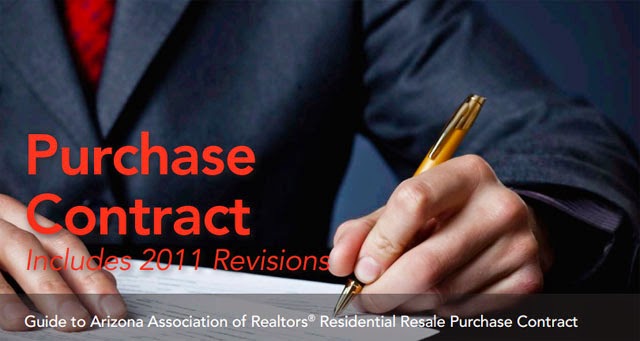
This is generally the first contingency listed in the contract. For instance, in the Arizona Association of Realtors® Residential Purchase Agreement, it is on page 2, section 2b.

Loan Contingency: Buyer's obligation to complete this sale is contingent upon Buyer obtaining loan approval for the loan described in the AAR Loan Status Update ("LSU") form without Prior to Document ("PTD") conditions no later then three (3) days prior to the COE Date. If Buyer is unable to obtain loan approval without PTD conditions, Buyer shall deliver a notice of the inability to obtain loan approval with PTD conditions to Seller or Escrow Company no later than three (3) days prior to the COE Date/

Unfulfilled Loan Contingency: This Contract shall be cancelled and Buyer shall be entitled to a return of the earnest money if after diligent and good faith effort, Buyer is unable to obtain loan approval without PTD conditions no later than three (3) days prior to the COE Date. Buyer acknoledge that prepaid items paid separately from earnest money are not refundable.

The loan approval contingency is one that the seller's agent will scrutinize when first going over your offer, and for good reason. The seller will be removing his home from the market if he accepts your offer and taking a chance that your loan will come through. The longer you take to get loan approval, the longer his home is off the market. If you end up being denied the loan, the seller has lost valuable marketing time.

Most contingencies work this way: Even if the contract states a time period, the buyer can choose a time frame that is more to her liking and hope the seller is OK with it.

Home Inspection
The home inspection offers the buyer an opportunity to determine, through the help of a professional, if there is anything wrong with the home's structure and major systems. It is a visual inspection only, so don't plan on finding out if there's something brewing behind the walls.

Most inspection contingencies state that you have the right to back out of the contract if the results of the inspection aren't satisfactory. Others may state that you can back out if the seller refuses to remedy any problems. Decide ahead of time how you want your inspection contingency worded.

If the inspection turns up items in need of replacement or repair, you can ask the seller to fix the problems, to deduct the cost of the repairs from the price of the house, to credit you back the money to fix them (if the lender allows this) or you can walk away from the purchase and receive your earnest money deposit back.

As stated in Arizona Association of Realtors® Residential Purchase Agreement page 5 section 6a, Buyer's Inspection Periods shall be ten (10) days after contract acceptance. After 10 days inspection periods, Buyer has 3 options:
  • Accept premises as current conditions and no corrections or repairs are requested
  • Premises Rejected
  • Buyer elects to provide Seller an opportunity to correct the disapproved items
Seller has 5 days to response to Buyer's request.

Sale of the Buyer's Property
It's often an immense juggling act to sell one house before you close on another. In these cases, buyers frequently make the purchase of the new home contingent on the successful sale of their current home.

Whether a seller will accept an offer with this contingency depends on a number of factors. In a seller's market this contingency is typically rejected. When there are few buyers competing for homes, however, sellers are more motivated to accept less-than-ideal offers.

The seller's personal situation may play into his decision as well. If he needs to sell his home quickly, he may reject your offer, or counter it, asking for the contingency to be removed from the offer.

Inspection of HOA Documents
If the property you hope to purchase is in a community with a homeowners association, you will be provided with a mountain of documents. These include, but aren't limited to:
  • Covenants, Conditions and Restrictions (CC&Rs) - These include pet policies, parking rules, rules for the use of on-site amenities, exterior décor, landscaping restrictions and more
  • The HOA Budget - This includes important information about where the money goes and whether the reserve account contains enough money to meet emergencies
  • HOA Board Meeting Minutes - The meeting minutes will let you take a peek behind the scenes and find out what type of issues the board generally deals with, what actions they have taken against homeowners, and if there has been any discussion about raising fees or levying special assessments
  • Governing Documents - Sometimes called bylaws, these documents let you know how elections are run, how a homeowner can go about getting a seat on the board, and the length of each member's term. You'll need the time to read through each document carefully, especially to determine if there is any pending litigation against the HOA or the developer. If there is, your lender may deny the loan. Ensure that you are provided adequate time to either read the paperwork yourself or have your lawyer go over it.
Appraisal Contingency
Unless you are paying cash for the home, the appraisal contingency is second in importance only to the loan approval contingency. The appraised value of the home represents the maximum amount of money the lender will give you. If the lender's appraiser determines that the home isn't worth what you've agreed to pay for it, you have several options:
  • Ask the seller to lower the home's price to the appraised value
  • Increase the amount of your down payment to reduce the loan amount
  • A combination of the first two; the seller reduces the price and you add more cash to meet the appraised amount
  • Ask for a new appraisal. This only works if the appraiser made mistakes or if you or the seller can add information that the appraiser didn't take into account
  • Walk away from the purchase
  • Your real estate agent is your best source of information on the various contingencies in a real estate contract. Follow your agent's advice about staying on task during the process so that you can formally remove the contingencies by the dates specified.
Ready to Buy?
  • Call 480.721.6253 or Contact Us to schedule a Complimentary & NO OBLIGATION Buyer Consultation
  • TXT AZ246 to 32323 to Download My GPS enabled Mobile App and Browse Homes on your smartphone
photo of Swee Ng
Keller Williams Realty

15905 S 46th St #160
Phoenix , AZ , 85048
480-721-6253


Swee Ng, Realtor with Keller Williams Realty, specialize in Residential Resale, First Time Home Buyer and Investment Homes.
Call 480.721.6253 today for complimentary consultation. Buyer's Representation Services (NO COST TO HOMEBUYERS)

Saturday, August 2, 2014

5% Gift Down Payment Program

Pin It

New 5% Gift Down Payment Program for Conventional Mortgage

Posted on
Introducing New 5% Gift Down Payment Program from our lender partner. Entire 5% down payment can be gifted by another person. For example, family members can give down payment for your new home with conventional loan.

New 5% Gift Down Payment Program for Conventional Loan

Academy's expanded requirements take the stress out of using gift funds to purchase a new home. Gifts/grants are now allowed to be considered part of the borrower's own funds.
  • Entire 5% down payment can be gifted by another person
  • Private mortgage insurance is required, yet premiums are lower than on a comparable FHA loan
  • Seller or lender credits for closing costs are allowed
  • Gifts of equity are allowed


Ready to Buy?
  • Call 480.721.6253 or Contact Us to schedule a Complimentary & NO OBLIGATION Buyer Consultation
  • TXT AZ246 to 32323 to Download My GPS enabled Mobile App and Browse Homes on your smartphone
photo of Swee Ng
Keller Williams Realty

15905 S 46th St #160
Phoenix , AZ , 85048
480-721-6253

Swee Ng, Realtor with Keller Williams Realty, specialize in Residential Resale, First Time Home Buyer and Investment Homes.
Call 480.721.6253 today for complimentary consultation. Buyer's Representation Services (NO COST TO HOMEBUYERS)

Thursday, July 24, 2014

Home Buyer Tips: Get What You Want

Pin It

Home Buyer Tips: Get What You Want

Posted on
Gilbert Home Buyer Tips: The Value of Being Pre-Approved

According to KW research, the majority of home buyers saw fewer than 11 houses. In fact, folks who saw thirty or more houses only accounted for 5% of all sales. Finding a great agent who can help you narrow your focus can go a long way to getting exactly what you want.


Affordable Financing Options
Several low down payment financing options including; FHA 3.5% 0.5% Down Financing, VA ZERO Down Financing, Conventional 5% Gift Down Payment Program and others are available. Contact Us to find out what loan programs you qualify for. Learn more about how to buy a house in Gilbert AZ with a low down payment.

Ready to Buy?
  • Call 480.721.6253 or Contact Us to schedule a Complimentary & NO OBLIGATION Buyer Consultation
  • TXT AZ246 to 32323 to Download My GPS enabled Mobile App and Browse Homes on your smartphone
photo of Swee Ng
Keller Williams Realty

15905 S 46th St #160
Phoenix , AZ , 85048
480-721-6253

Swee Ng, Realtor with Keller Williams Realty who live, work and play in Gilbert AZ, specialize in Residential Resale, First Time Home Buyer and Investment Homes.
Call 480.721.6253 today for complementary consultation. Buyer's Representation Services (NO COST TO HOMEBUYERS)

Smarthome Amazon Alexa 'works with'
Twitter Delicious Facebook Digg Stumbleupon Favorites More

 
Design by Free WordPress Themes | Bloggerized by Lasantha - Premium Blogger Themes | Premium Wordpress Themes